

Dr. Ankit Mehra
Published on October 13, 2026
How to Control Hair Fall Naturally: 9 Practical Tips That May Help
Quick answer: To control hair fall naturally, find the trigger first (stress, crash dieting, low iron or vitamin D, harsh styling, illness), then fix it. Eat enough protein and iron, cut heat and tight styles, wash the scalp gently, sleep well, manage stress, and give any routine 3 to 6 months. Natural methods help most with temporary shedding. Patchy loss or steady thinning needs a dermatologist.
Is Your Hair Fall Normal?
Most people lose about 50 to 100 hairs a day as part of the normal hair growth cycle. Worry when you see clumps in the shower, a widening parting, round bald patches, or shedding that lasts more than 2 to 3 months.
Understanding the Hair Growth Cycle
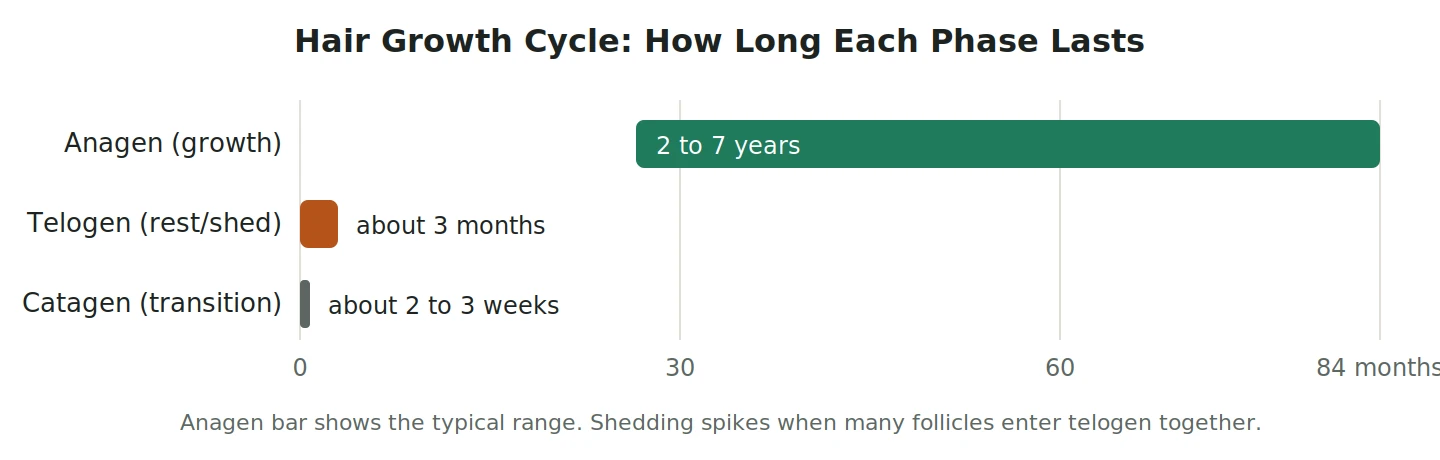
Hair grows in three phases. Shedding spikes when many follicles enter the resting phase together.
| Phase | What Happens | Approximate Duration |
|---|---|---|
| Anagen | Active growth | 2 to 7 years |
| Catagen | Transition phase | 2 to 3 weeks |
| Telogen | Rest and shedding | About 3 months |
What Causes Hair Fall?
| Cause | Typical Pattern | Do Natural Methods Help? |
|---|---|---|
| Telogen effluvium (stress, illness, childbirth, crash diet) | Diffuse shedding about 2 to 3 months after the trigger | Yes, it usually resolves once the trigger is removed |
| Nutrient gaps (iron, vitamin D, zinc, protein) | General thinning, brittle hair | Yes, if confirmed by a blood test |
| Traction or heat damage | Breakage, thinning at the hairline | Yes, change styling habits |
| Androgenetic alopecia (pattern hair loss) | Gradual thinning at the crown or parting | Limited, medical treatment is usually needed |
| Alopecia areata, thyroid disorders, PCOS | Patches or sudden change | No, see a doctor |
9 Natural Ways to Control Hair Fall
1. Wash Gently and Keep the Scalp Healthy
Use a mild shampoo 2 to 3 times a week, or more often if your scalp is oily. Dandruff and scalp inflammation can worsen shedding, so treat flaking early rather than masking it with oil.
2. Cut Back on Heat and Tight Styles
- Air-dry or use low heat, and keep styling tools under about 180°C.
- Avoid tight ponytails, buns and braids that pull on the hairline.
- Detangle from the ends upward when hair is damp.
3. Eat for Your Follicles
Hair is mostly keratin, so undereating shows up on your scalp. Build meals around protein plus iron- and zinc-rich foods.
- Protein: eggs, dal, paneer, fish, chicken, tofu
- Iron: lentils, spinach, chickpeas, red meat (pair with vitamin C)
- Zinc: pumpkin seeds, nuts, whole grains
- Vitamin D: safe sun exposure, fortified foods, oily fish
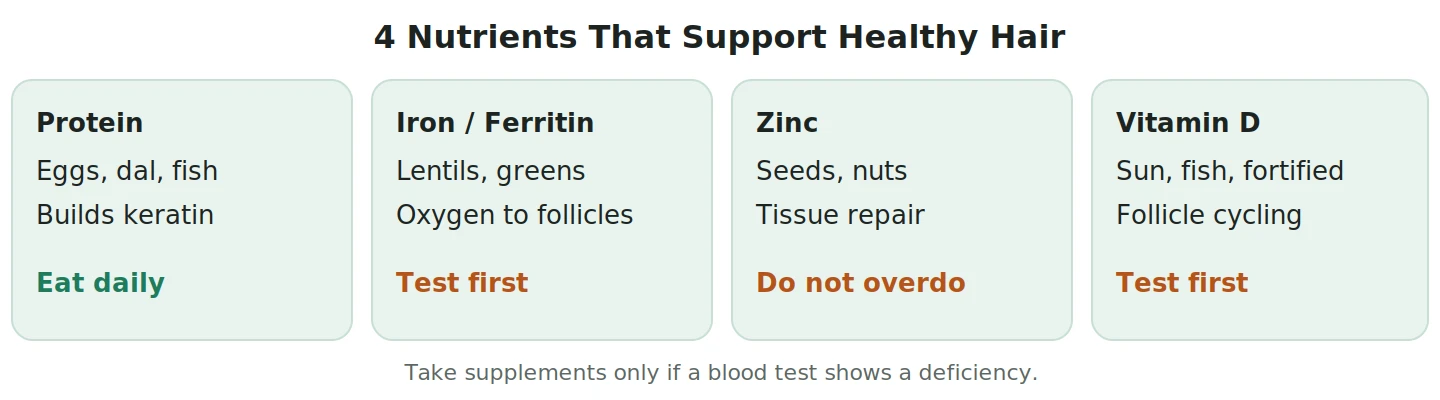
Supplements are only worth taking when a blood test shows a deficiency. Excess iron, zinc or vitamin D can cause harm.
4. Try a Daily Scalp Massage
Small studies suggest a few minutes of scalp massage may thicken hair over months, likely by boosting blood flow. Evidence is limited, but it is low-risk and doubles as a stress reliever.
5. Manage Stress
Major stress can push follicles into the shedding phase, visible about 2 to 3 months later. Walking, breathing exercises, yoga or therapy all count as hair care.
6. Protect Your Sleep
Aim for 7 to 9 hours. Chronic sleep loss raises stress hormones and slows recovery.
7. Use Rosemary Oil Cautiously
One small 2015 trial found rosemary oil comparable to 2% minoxidil after six months, but the study was small and is not a substitute for medical care. Dilute it in a carrier oil and patch-test first. Onion juice, fenugreek and similar home remedies have weaker evidence.
8. Avoid Crash Diets and Rapid Weight Loss
Severe calorie restriction is a classic telogen effluvium trigger. Lose weight gradually with adequate protein.
9. Get Tested and See a Dermatologist When Needed
Ask for ferritin, vitamin D, thyroid (TSH) and a complete blood count. Proven medical options exist for pattern loss, so early diagnosis with a dermatologist matters.
When to See a Doctor
- Sudden or patchy hair loss
- Scalp pain, redness or scarring
- Hair fall after starting a new medication
- No improvement after 3 to 6 months
How Long Until You See Results?
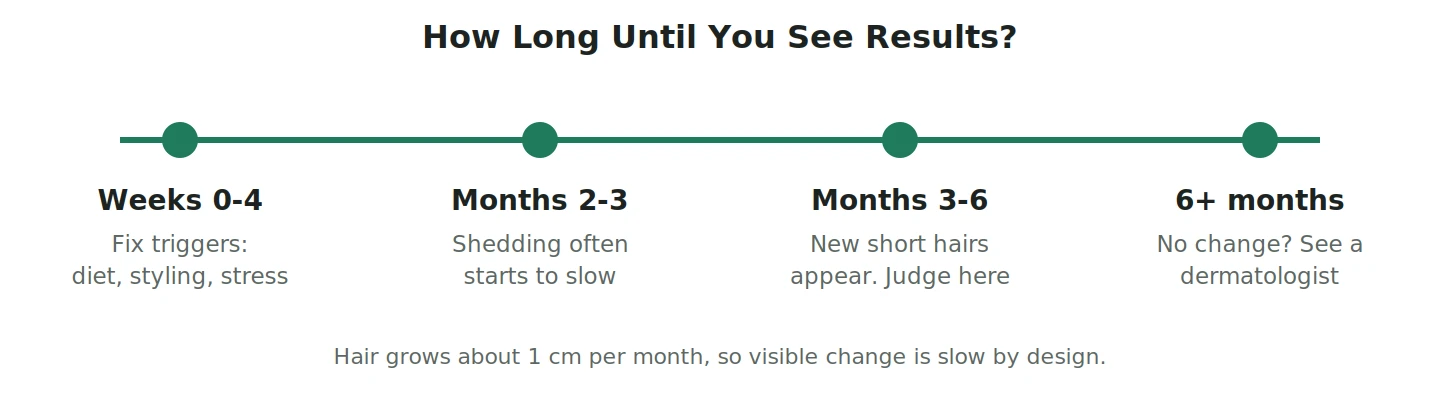
- Weeks 0 to 4: Fix triggers such as diet, styling and stress. Shedding may not change yet.
- Months 2 to 3: Shedding often slows as the rest phase ends.
- Months 3 to 6: New short hairs appear. This is when to judge your routine.
- 6+ months: No change? Book a dermatology consultation.
Hair grows about 1 cm per month, so visible change is slow by design.
Final Thoughts
Controlling hair fall naturally is mostly detective work: identify the trigger, remove it, feed your follicles, and stay consistent for a full growth cycle. Skip miracle cures, and if shedding continues or follows a patchy pattern, do not delay professional hair loss treatment.
Frequently Asked Questions
1. How many hairs is it normal to lose in a day?
About 50 to 100. Consistently more, visible patches, or thinning beyond a few months warrants a medical check.
2. Can hair fall be stopped naturally?
Sometimes. Natural methods work when the cause is stress, nutrition or styling. They cannot reverse genetic or autoimmune hair loss.
3. How long do natural remedies take to work?
Allow 3 to 6 months of consistency, since hair grows roughly 1 cm a month.
4. Does oiling stop hair fall?
Oiling can reduce breakage and improve manageability, but there is no strong evidence that it stops hair loss from the root.
5. Which vitamin deficiency causes hair fall?
Low iron (ferritin), vitamin D and zinc are commonly linked to hair shedding. Get tested before supplementing.
Disclaimer: This article is for general information and is not medical advice. Consult a qualified healthcare professional for diagnosis and treatment.

