
Dr. Ankit Mehra
Published on February 20, 2026
Skin Allergies During Weather Change: Causes, Symptoms & Treatment Guide
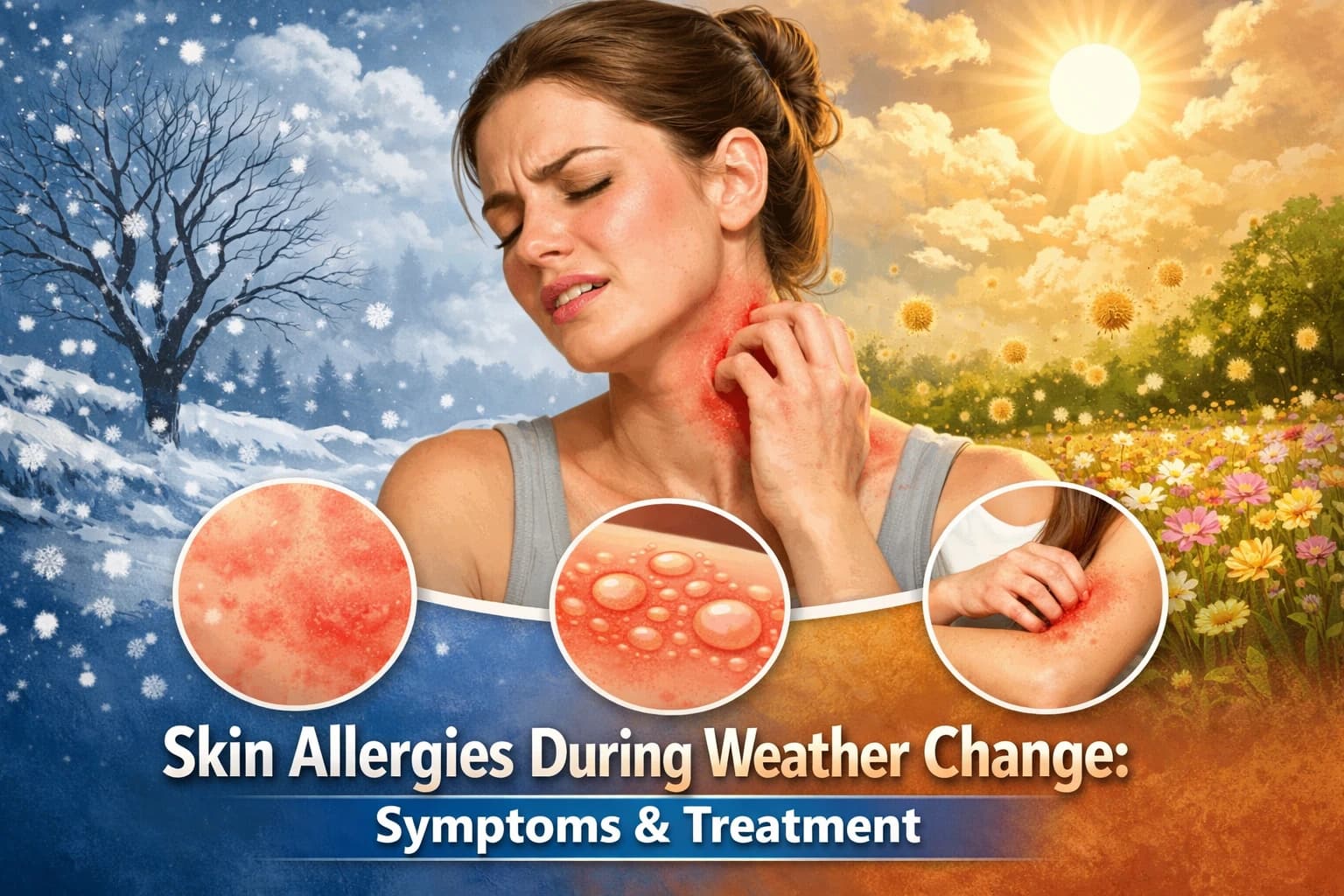
Weather change is one of the most common triggers for skin allergies. As seasons shift—from summer to monsoon or winter to spring—our skin struggles to adapt to sudden changes in temperature, humidity, dust levels, and pollen exposure.
Many people in Ajmer and nearby areas experience itching, rashes, dryness, redness, or fungal infections during seasonal transitions. If your skin reacts every time the weather changes, this detailed guide will help you understand the causes, symptoms, and best treatment options available.
Why Do Skin Allergies Increase During Weather Change?
Seasonal changes directly affect your skin’s protective barrier. When this barrier weakens, allergens and irritants can penetrate more easily.
1. Sudden Temperature Fluctuations
Rapid shifts from hot to cold or humid to dry air disturb the skin’s natural oil balance, leading to irritation and redness.
2. Low Humidity in Winter
Cold air strips moisture from your skin, causing dryness, flaking, and itching.
3. Increased Pollen in Spring
Pollens released by plants and trees can trigger allergic reactions in sensitive individuals.
4. Dust & Pollution
Strong winds increase dust exposure, irritating exposed skin and triggering inflammation.
5. Fungal Growth in Humid Weather
During monsoon, high moisture levels create a favorable environment for fungal infections.
Common Symptoms of Seasonal Skin Allergies
- Persistent itching
- Red rashes or raised bumps
- Dry, flaky skin
- Swelling in affected areas
- Burning sensation
- Small blisters
- Hives (urticaria)
- Patchy skin discoloration
If symptoms last more than a few days or worsen, medical consultation is essential.
Types of Skin Allergies During Weather Change
1. Eczema (Atopic Dermatitis)
Often worsens in winter due to dryness. Skin becomes inflamed, itchy, and cracked.
2. Contact Dermatitis
Triggered by allergens like dust, pollen, or certain fabrics.
3. Urticaria (Hives)
Sudden red, raised itchy patches caused by allergic reactions.
4. Fungal Infections
Common in humid weather, especially in skin folds.
Who Is More at Risk?
- People with sensitive skin
- Individuals with asthma or allergic rhinitis
- Children and elderly
- Those with a history of eczema
- People exposed to dust and pollution regularly
Effective Treatment Options
1. Moisturizers
Use fragrance-free moisturizers regularly to maintain hydration.
2. Antihistamines
Help reduce itching and allergic reactions.
3. Topical Steroid Creams
Prescribed for moderate to severe inflammation under medical supervision.
4. Antifungal Creams
Effective during monsoon-related fungal infections.
5. Gentle Skincare Routine
Use mild cleansers and lukewarm water for bathing.
Home Remedies for Mild Cases
- Applying aloe vera gel
- Using cold compress for itching relief
- Taking oatmeal baths
- Staying hydrated
- Wearing breathable cotton clothes
Preventive Tips During Seasonal Change
- Apply sunscreen even in winter
- Use a humidifier during dry seasons
- Avoid harsh chemical products
- Keep skin moisturized twice daily
- Maintain personal hygiene
- Change sweaty clothes immediately
- Keep nails trimmed
When Should You See a Doctor?
- Rash spreads rapidly
- Severe swelling occurs
- Skin becomes infected (pus, fever)
- Symptoms do not improve within 3–5 days
- Frequent recurrence during every season change
Expert Skin Care in Ajmer
If you are struggling with seasonal skin allergies, consult an experienced dermatologist for accurate diagnosis and personalized treatment.
Dr. Ankit Mehra
📞 Call: 96970 41111
📍 Clinic: 62, Lane no 2, opp. Hotel Ambassador, Nagina Bagh, Ajmer
Dr. Ankit Mehra provides comprehensive evaluation and advanced treatment for eczema, fungal infections, urticaria, and chronic skin allergies.
Final Thoughts
Skin allergies during weather change are common but manageable. Early recognition, proper skincare, and timely medical consultation can significantly reduce flare-ups and prevent complications.

